🎉 Up to 70% Off Selected ItemsShop Sale

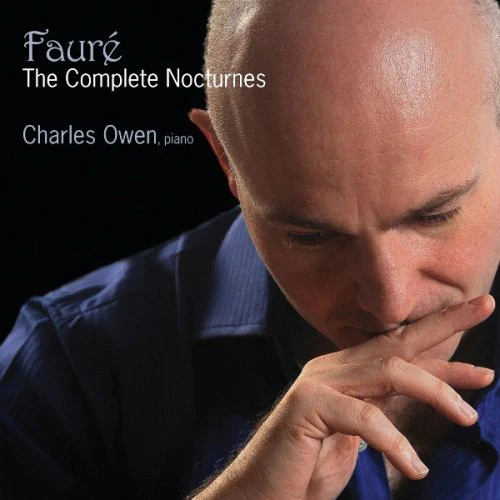
Faure: Complete Nocturnes / Charles Owen
Unaffectedly straightforward with a disarming simplicity in which charm lifts imperceptibly into the most intense utterance, moving us compellingly through the salon-like early pieces to the increasingly desolate soundscapes of old age. Exemplary. Classic. Spellbinding.
3211180.az_FAURE_Nocturnes_Charles.html
FAURÉ Nocturnes (complete) • Charles Owen (pn) • AVIE 2133 (79:36)
Fauré’s son, Philippe Fauré-Fremiet, described the composer’s playing: “His hands were strong and looked heavy; in fact they were supple and light. He hardly raised them above the keys but was able to obtain any effect he wanted. He had a horror of virtuosity, of rubato and effects aimed at making the audience swoon. He followed the printed notes meticulously, keeping strict time. What was so overpowering about his playing lay below the surface, in the areas of thought and emotion where teaching is helpless to guide you.” To which Jessica Duchen, in her annotations for David Jalbert’s unfortunate tilt at the nocturnes (Endeavour 1014, Fanfare 30:1), adds, “To play Fauré’s piano works successfully, a pianist must have a tremendously flexible technique, a strong sense of contrapuntal voicing and, perhaps above all, the ability to convey those sensuous, intertwining lines and subtle harmonies without allowing structural rigor to slacken. While playing this music with no expressive fluctuation whatsoever could seem excessive, a healthy respect for his ‘pudeur’—modesty veiling the immense sensuality beneath—is as essential to faithful Fauré interpretation as good posture is to the dance.” Both observations describe Charles Owen’s way with the nocturnes—unaffectedly straightforward, rhythmically steady (but breathing and never rigid or inflexible), the pedal sparingly used, allowing a light touch (graciously deft in animated passages) to articulate with absolute clarity while imparting moments of aquarelle-like color (rather than the heavily sustained impasto of the average pianist), all making for a disarming simplicity in which charm lifts imperceptibly into the most intense utterance, moving us compellingly through the salon-like early pieces, the opulent ecstasies of the middle nocturnes, and the increasingly desolate and despairing soundscapes of old age. Duchen confects a final elegance with other, no less gracefully penetrating, annotations. Avie captures Owen closely, at the optimal point where clarity flares into spaciousness. Exemplary. Classic. Spellbinding. And enthusiastically recommended.
FANFARE: Adrian Corleonis
FAURÉ Nocturnes (complete) • Charles Owen (pn) • AVIE 2133 (79:36)
Fauré’s son, Philippe Fauré-Fremiet, described the composer’s playing: “His hands were strong and looked heavy; in fact they were supple and light. He hardly raised them above the keys but was able to obtain any effect he wanted. He had a horror of virtuosity, of rubato and effects aimed at making the audience swoon. He followed the printed notes meticulously, keeping strict time. What was so overpowering about his playing lay below the surface, in the areas of thought and emotion where teaching is helpless to guide you.” To which Jessica Duchen, in her annotations for David Jalbert’s unfortunate tilt at the nocturnes (Endeavour 1014, Fanfare 30:1), adds, “To play Fauré’s piano works successfully, a pianist must have a tremendously flexible technique, a strong sense of contrapuntal voicing and, perhaps above all, the ability to convey those sensuous, intertwining lines and subtle harmonies without allowing structural rigor to slacken. While playing this music with no expressive fluctuation whatsoever could seem excessive, a healthy respect for his ‘pudeur’—modesty veiling the immense sensuality beneath—is as essential to faithful Fauré interpretation as good posture is to the dance.” Both observations describe Charles Owen’s way with the nocturnes—unaffectedly straightforward, rhythmically steady (but breathing and never rigid or inflexible), the pedal sparingly used, allowing a light touch (graciously deft in animated passages) to articulate with absolute clarity while imparting moments of aquarelle-like color (rather than the heavily sustained impasto of the average pianist), all making for a disarming simplicity in which charm lifts imperceptibly into the most intense utterance, moving us compellingly through the salon-like early pieces, the opulent ecstasies of the middle nocturnes, and the increasingly desolate and despairing soundscapes of old age. Duchen confects a final elegance with other, no less gracefully penetrating, annotations. Avie captures Owen closely, at the optimal point where clarity flares into spaciousness. Exemplary. Classic. Spellbinding. And enthusiastically recommended.
FANFARE: Adrian Corleonis
Unaffectedly straightforward with a disarming simplicity in which charm lifts imperceptibly into the most intense utterance, moving us compellingly through the salon-like early pieces to the increasingly desolate soundscapes of old age. Exemplary. Classic. Spellbinding.
3211180.az_FAURE_Nocturnes_Charles.html
FAURÉ Nocturnes (complete) • Charles Owen (pn) • AVIE 2133 (79:36)
Fauré’s son, Philippe Fauré-Fremiet, described the composer’s playing: “His hands were strong and looked heavy; in fact they were supple and light. He hardly raised them above the keys but was able to obtain any effect he wanted. He had a horror of virtuosity, of rubato and effects aimed at making the audience swoon. He followed the printed notes meticulously, keeping strict time. What was so overpowering about his playing lay below the surface, in the areas of thought and emotion where teaching is helpless to guide you.” To which Jessica Duchen, in her annotations for David Jalbert’s unfortunate tilt at the nocturnes (Endeavour 1014, Fanfare 30:1), adds, “To play Fauré’s piano works successfully, a pianist must have a tremendously flexible technique, a strong sense of contrapuntal voicing and, perhaps above all, the ability to convey those sensuous, intertwining lines and subtle harmonies without allowing structural rigor to slacken. While playing this music with no expressive fluctuation whatsoever could seem excessive, a healthy respect for his ‘pudeur’—modesty veiling the immense sensuality beneath—is as essential to faithful Fauré interpretation as good posture is to the dance.” Both observations describe Charles Owen’s way with the nocturnes—unaffectedly straightforward, rhythmically steady (but breathing and never rigid or inflexible), the pedal sparingly used, allowing a light touch (graciously deft in animated passages) to articulate with absolute clarity while imparting moments of aquarelle-like color (rather than the heavily sustained impasto of the average pianist), all making for a disarming simplicity in which charm lifts imperceptibly into the most intense utterance, moving us compellingly through the salon-like early pieces, the opulent ecstasies of the middle nocturnes, and the increasingly desolate and despairing soundscapes of old age. Duchen confects a final elegance with other, no less gracefully penetrating, annotations. Avie captures Owen closely, at the optimal point where clarity flares into spaciousness. Exemplary. Classic. Spellbinding. And enthusiastically recommended.
FANFARE: Adrian Corleonis
FAURÉ Nocturnes (complete) • Charles Owen (pn) • AVIE 2133 (79:36)
Fauré’s son, Philippe Fauré-Fremiet, described the composer’s playing: “His hands were strong and looked heavy; in fact they were supple and light. He hardly raised them above the keys but was able to obtain any effect he wanted. He had a horror of virtuosity, of rubato and effects aimed at making the audience swoon. He followed the printed notes meticulously, keeping strict time. What was so overpowering about his playing lay below the surface, in the areas of thought and emotion where teaching is helpless to guide you.” To which Jessica Duchen, in her annotations for David Jalbert’s unfortunate tilt at the nocturnes (Endeavour 1014, Fanfare 30:1), adds, “To play Fauré’s piano works successfully, a pianist must have a tremendously flexible technique, a strong sense of contrapuntal voicing and, perhaps above all, the ability to convey those sensuous, intertwining lines and subtle harmonies without allowing structural rigor to slacken. While playing this music with no expressive fluctuation whatsoever could seem excessive, a healthy respect for his ‘pudeur’—modesty veiling the immense sensuality beneath—is as essential to faithful Fauré interpretation as good posture is to the dance.” Both observations describe Charles Owen’s way with the nocturnes—unaffectedly straightforward, rhythmically steady (but breathing and never rigid or inflexible), the pedal sparingly used, allowing a light touch (graciously deft in animated passages) to articulate with absolute clarity while imparting moments of aquarelle-like color (rather than the heavily sustained impasto of the average pianist), all making for a disarming simplicity in which charm lifts imperceptibly into the most intense utterance, moving us compellingly through the salon-like early pieces, the opulent ecstasies of the middle nocturnes, and the increasingly desolate and despairing soundscapes of old age. Duchen confects a final elegance with other, no less gracefully penetrating, annotations. Avie captures Owen closely, at the optimal point where clarity flares into spaciousness. Exemplary. Classic. Spellbinding. And enthusiastically recommended.
FANFARE: Adrian Corleonis
$14.99
Faure: Complete Nocturnes / Charles Owen—
$14.99
Description
Unaffectedly straightforward with a disarming simplicity in which charm lifts imperceptibly into the most intense utterance, moving us compellingly through the salon-like early pieces to the increasingly desolate soundscapes of old age. Exemplary. Classic. Spellbinding.
3211180.az_FAURE_Nocturnes_Charles.html
FAURÉ Nocturnes (complete) • Charles Owen (pn) • AVIE 2133 (79:36)
Fauré’s son, Philippe Fauré-Fremiet, described the composer’s playing: “His hands were strong and looked heavy; in fact they were supple and light. He hardly raised them above the keys but was able to obtain any effect he wanted. He had a horror of virtuosity, of rubato and effects aimed at making the audience swoon. He followed the printed notes meticulously, keeping strict time. What was so overpowering about his playing lay below the surface, in the areas of thought and emotion where teaching is helpless to guide you.” To which Jessica Duchen, in her annotations for David Jalbert’s unfortunate tilt at the nocturnes (Endeavour 1014, Fanfare 30:1), adds, “To play Fauré’s piano works successfully, a pianist must have a tremendously flexible technique, a strong sense of contrapuntal voicing and, perhaps above all, the ability to convey those sensuous, intertwining lines and subtle harmonies without allowing structural rigor to slacken. While playing this music with no expressive fluctuation whatsoever could seem excessive, a healthy respect for his ‘pudeur’—modesty veiling the immense sensuality beneath—is as essential to faithful Fauré interpretation as good posture is to the dance.” Both observations describe Charles Owen’s way with the nocturnes—unaffectedly straightforward, rhythmically steady (but breathing and never rigid or inflexible), the pedal sparingly used, allowing a light touch (graciously deft in animated passages) to articulate with absolute clarity while imparting moments of aquarelle-like color (rather than the heavily sustained impasto of the average pianist), all making for a disarming simplicity in which charm lifts imperceptibly into the most intense utterance, moving us compellingly through the salon-like early pieces, the opulent ecstasies of the middle nocturnes, and the increasingly desolate and despairing soundscapes of old age. Duchen confects a final elegance with other, no less gracefully penetrating, annotations. Avie captures Owen closely, at the optimal point where clarity flares into spaciousness. Exemplary. Classic. Spellbinding. And enthusiastically recommended.
FANFARE: Adrian Corleonis
FAURÉ Nocturnes (complete) • Charles Owen (pn) • AVIE 2133 (79:36)
Fauré’s son, Philippe Fauré-Fremiet, described the composer’s playing: “His hands were strong and looked heavy; in fact they were supple and light. He hardly raised them above the keys but was able to obtain any effect he wanted. He had a horror of virtuosity, of rubato and effects aimed at making the audience swoon. He followed the printed notes meticulously, keeping strict time. What was so overpowering about his playing lay below the surface, in the areas of thought and emotion where teaching is helpless to guide you.” To which Jessica Duchen, in her annotations for David Jalbert’s unfortunate tilt at the nocturnes (Endeavour 1014, Fanfare 30:1), adds, “To play Fauré’s piano works successfully, a pianist must have a tremendously flexible technique, a strong sense of contrapuntal voicing and, perhaps above all, the ability to convey those sensuous, intertwining lines and subtle harmonies without allowing structural rigor to slacken. While playing this music with no expressive fluctuation whatsoever could seem excessive, a healthy respect for his ‘pudeur’—modesty veiling the immense sensuality beneath—is as essential to faithful Fauré interpretation as good posture is to the dance.” Both observations describe Charles Owen’s way with the nocturnes—unaffectedly straightforward, rhythmically steady (but breathing and never rigid or inflexible), the pedal sparingly used, allowing a light touch (graciously deft in animated passages) to articulate with absolute clarity while imparting moments of aquarelle-like color (rather than the heavily sustained impasto of the average pianist), all making for a disarming simplicity in which charm lifts imperceptibly into the most intense utterance, moving us compellingly through the salon-like early pieces, the opulent ecstasies of the middle nocturnes, and the increasingly desolate and despairing soundscapes of old age. Duchen confects a final elegance with other, no less gracefully penetrating, annotations. Avie captures Owen closely, at the optimal point where clarity flares into spaciousness. Exemplary. Classic. Spellbinding. And enthusiastically recommended.
FANFARE: Adrian Corleonis