🎉 Up to 70% Off Selected ItemsShop Sale

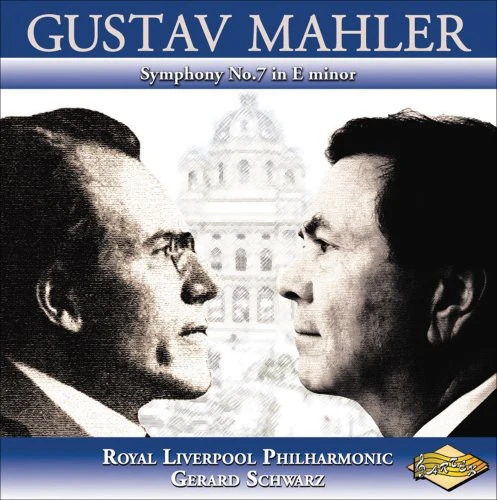
Mahler: Symphony No 7 In E Minor / Gerard Schwarz, Royal Liverpool Po
"Gerard Schwarz offers a solid interpretation of the Seventh Symphony that merits attention from start to finish." - Opera Today
=====
3222250.az_MAHLER_Symphony_7_Gerard.html
MAHLER Symphony No. 7 • Gerard Schwarz, cond; Royal Liverpool PO • ARTEK 43 (76:00)
Generally speaking, Mahler’s late symphonies—except for No. 8, which is extremely popular because of its splendid exhibitionism, despite its complexity—are not only unpopular but also extremely difficult to bring off well, and the Seventh has always been considered the most difficult of all. Only a handful of conductors, among them Kubelík, Abbado, and Boulez, seem to have managed to solve this hardest of Mahler’s musical puzzles. All three of the conductors named were able to do so because they reveled in its grotesqueries, yet were able to knit its disparate elements together, and even they do not always succeed (or succeed equally) in each of the performances they lead.
As I write these introductory words, I am in fact listening to Rafael Kubelík conduct the symphony, the performance of February 28, 1981, with the New York Philharmonic that is generally considered to be his finest. All the swirling details of the score are brought out clearly, yet each and every element is knitted together splendidly and woven into a tapestry that touches the spirit and evokes a world of different moods. Kubelík’s tempos, in this performance especially, were rather slow, yet they never sound slow; he maintains momentum, no matter how convoluted the texture or how difficult the rhythms, and sustains tension despite his slowness.
Switching to Schwarz, one hears a performance 10 minutes faster than Kubelík’s. There is less rubato, more of a linear concept. It is played with great feeling, however—something I did not hear in Schwarz’s readings of the First and Ninth symphonies—and although not quite as fiery as Abbado’s second, more successful, recording, it works very well. Like Kubelík, Schwarz revels in the music’s grotesqueries, albeit in stricter tempo. There is sufficient relaxation in the soft string passages to offset this drama, and the Royal Liverpool orchestra responds with verve and great feeling to Schwarz’s every shift of mood.
The first “Nachtmusik” movement plays off the dark and light elements in perfect equilibrium. The lyrical middle section has just the right tenderness and gemütlich for the music. The music sings—and how it sings! One almost expects a soprano to come swooping in at any moment. The Scherzo has proper bounce and swagger, with a light touch that makes the odd violin glisses sound like aerial acrobats riding above the ebb and flow of the music. There is also a touch of humor, so important in this score. The second “Nachtmusik” continues this mood in a most charming vein. In the finale, Schwarz pulls out all the stops: the music leaps from the speakers and grabs you by the shoulders. There is an almost Baroque feeling to the counterpoint, though dressed in modern harmonic clothing, that Schwarz, an expert Baroque conductor, understands very well.
Gerard, you scored a hit with this one! The sound quality is nothing short of fantastic. Five stars, easily.
FANFARE: Lynn René Bayley
=====
MAHLER Symphony No. 7 • Gerard Schwarz, cond; Royal Liverpool PO • ARTEK 43 (76:00)
Generally speaking, Mahler’s late symphonies—except for No. 8, which is extremely popular because of its splendid exhibitionism, despite its complexity—are not only unpopular but also extremely difficult to bring off well, and the Seventh has always been considered the most difficult of all. Only a handful of conductors, among them Kubelík, Abbado, and Boulez, seem to have managed to solve this hardest of Mahler’s musical puzzles. All three of the conductors named were able to do so because they reveled in its grotesqueries, yet were able to knit its disparate elements together, and even they do not always succeed (or succeed equally) in each of the performances they lead.
As I write these introductory words, I am in fact listening to Rafael Kubelík conduct the symphony, the performance of February 28, 1981, with the New York Philharmonic that is generally considered to be his finest. All the swirling details of the score are brought out clearly, yet each and every element is knitted together splendidly and woven into a tapestry that touches the spirit and evokes a world of different moods. Kubelík’s tempos, in this performance especially, were rather slow, yet they never sound slow; he maintains momentum, no matter how convoluted the texture or how difficult the rhythms, and sustains tension despite his slowness.
Switching to Schwarz, one hears a performance 10 minutes faster than Kubelík’s. There is less rubato, more of a linear concept. It is played with great feeling, however—something I did not hear in Schwarz’s readings of the First and Ninth symphonies—and although not quite as fiery as Abbado’s second, more successful, recording, it works very well. Like Kubelík, Schwarz revels in the music’s grotesqueries, albeit in stricter tempo. There is sufficient relaxation in the soft string passages to offset this drama, and the Royal Liverpool orchestra responds with verve and great feeling to Schwarz’s every shift of mood.
The first “Nachtmusik” movement plays off the dark and light elements in perfect equilibrium. The lyrical middle section has just the right tenderness and gemütlich for the music. The music sings—and how it sings! One almost expects a soprano to come swooping in at any moment. The Scherzo has proper bounce and swagger, with a light touch that makes the odd violin glisses sound like aerial acrobats riding above the ebb and flow of the music. There is also a touch of humor, so important in this score. The second “Nachtmusik” continues this mood in a most charming vein. In the finale, Schwarz pulls out all the stops: the music leaps from the speakers and grabs you by the shoulders. There is an almost Baroque feeling to the counterpoint, though dressed in modern harmonic clothing, that Schwarz, an expert Baroque conductor, understands very well.
Gerard, you scored a hit with this one! The sound quality is nothing short of fantastic. Five stars, easily.
FANFARE: Lynn René Bayley
"Gerard Schwarz offers a solid interpretation of the Seventh Symphony that merits attention from start to finish." - Opera Today
=====
3222250.az_MAHLER_Symphony_7_Gerard.html
MAHLER Symphony No. 7 • Gerard Schwarz, cond; Royal Liverpool PO • ARTEK 43 (76:00)
Generally speaking, Mahler’s late symphonies—except for No. 8, which is extremely popular because of its splendid exhibitionism, despite its complexity—are not only unpopular but also extremely difficult to bring off well, and the Seventh has always been considered the most difficult of all. Only a handful of conductors, among them Kubelík, Abbado, and Boulez, seem to have managed to solve this hardest of Mahler’s musical puzzles. All three of the conductors named were able to do so because they reveled in its grotesqueries, yet were able to knit its disparate elements together, and even they do not always succeed (or succeed equally) in each of the performances they lead.
As I write these introductory words, I am in fact listening to Rafael Kubelík conduct the symphony, the performance of February 28, 1981, with the New York Philharmonic that is generally considered to be his finest. All the swirling details of the score are brought out clearly, yet each and every element is knitted together splendidly and woven into a tapestry that touches the spirit and evokes a world of different moods. Kubelík’s tempos, in this performance especially, were rather slow, yet they never sound slow; he maintains momentum, no matter how convoluted the texture or how difficult the rhythms, and sustains tension despite his slowness.
Switching to Schwarz, one hears a performance 10 minutes faster than Kubelík’s. There is less rubato, more of a linear concept. It is played with great feeling, however—something I did not hear in Schwarz’s readings of the First and Ninth symphonies—and although not quite as fiery as Abbado’s second, more successful, recording, it works very well. Like Kubelík, Schwarz revels in the music’s grotesqueries, albeit in stricter tempo. There is sufficient relaxation in the soft string passages to offset this drama, and the Royal Liverpool orchestra responds with verve and great feeling to Schwarz’s every shift of mood.
The first “Nachtmusik” movement plays off the dark and light elements in perfect equilibrium. The lyrical middle section has just the right tenderness and gemütlich for the music. The music sings—and how it sings! One almost expects a soprano to come swooping in at any moment. The Scherzo has proper bounce and swagger, with a light touch that makes the odd violin glisses sound like aerial acrobats riding above the ebb and flow of the music. There is also a touch of humor, so important in this score. The second “Nachtmusik” continues this mood in a most charming vein. In the finale, Schwarz pulls out all the stops: the music leaps from the speakers and grabs you by the shoulders. There is an almost Baroque feeling to the counterpoint, though dressed in modern harmonic clothing, that Schwarz, an expert Baroque conductor, understands very well.
Gerard, you scored a hit with this one! The sound quality is nothing short of fantastic. Five stars, easily.
FANFARE: Lynn René Bayley
=====
MAHLER Symphony No. 7 • Gerard Schwarz, cond; Royal Liverpool PO • ARTEK 43 (76:00)
Generally speaking, Mahler’s late symphonies—except for No. 8, which is extremely popular because of its splendid exhibitionism, despite its complexity—are not only unpopular but also extremely difficult to bring off well, and the Seventh has always been considered the most difficult of all. Only a handful of conductors, among them Kubelík, Abbado, and Boulez, seem to have managed to solve this hardest of Mahler’s musical puzzles. All three of the conductors named were able to do so because they reveled in its grotesqueries, yet were able to knit its disparate elements together, and even they do not always succeed (or succeed equally) in each of the performances they lead.
As I write these introductory words, I am in fact listening to Rafael Kubelík conduct the symphony, the performance of February 28, 1981, with the New York Philharmonic that is generally considered to be his finest. All the swirling details of the score are brought out clearly, yet each and every element is knitted together splendidly and woven into a tapestry that touches the spirit and evokes a world of different moods. Kubelík’s tempos, in this performance especially, were rather slow, yet they never sound slow; he maintains momentum, no matter how convoluted the texture or how difficult the rhythms, and sustains tension despite his slowness.
Switching to Schwarz, one hears a performance 10 minutes faster than Kubelík’s. There is less rubato, more of a linear concept. It is played with great feeling, however—something I did not hear in Schwarz’s readings of the First and Ninth symphonies—and although not quite as fiery as Abbado’s second, more successful, recording, it works very well. Like Kubelík, Schwarz revels in the music’s grotesqueries, albeit in stricter tempo. There is sufficient relaxation in the soft string passages to offset this drama, and the Royal Liverpool orchestra responds with verve and great feeling to Schwarz’s every shift of mood.
The first “Nachtmusik” movement plays off the dark and light elements in perfect equilibrium. The lyrical middle section has just the right tenderness and gemütlich for the music. The music sings—and how it sings! One almost expects a soprano to come swooping in at any moment. The Scherzo has proper bounce and swagger, with a light touch that makes the odd violin glisses sound like aerial acrobats riding above the ebb and flow of the music. There is also a touch of humor, so important in this score. The second “Nachtmusik” continues this mood in a most charming vein. In the finale, Schwarz pulls out all the stops: the music leaps from the speakers and grabs you by the shoulders. There is an almost Baroque feeling to the counterpoint, though dressed in modern harmonic clothing, that Schwarz, an expert Baroque conductor, understands very well.
Gerard, you scored a hit with this one! The sound quality is nothing short of fantastic. Five stars, easily.
FANFARE: Lynn René Bayley
$6.65
Original: $18.99
-65%Mahler: Symphony No 7 In E Minor / Gerard Schwarz, Royal Liverpool Po—
$18.99
$6.65Description
"Gerard Schwarz offers a solid interpretation of the Seventh Symphony that merits attention from start to finish." - Opera Today
=====
3222250.az_MAHLER_Symphony_7_Gerard.html
MAHLER Symphony No. 7 • Gerard Schwarz, cond; Royal Liverpool PO • ARTEK 43 (76:00)
Generally speaking, Mahler’s late symphonies—except for No. 8, which is extremely popular because of its splendid exhibitionism, despite its complexity—are not only unpopular but also extremely difficult to bring off well, and the Seventh has always been considered the most difficult of all. Only a handful of conductors, among them Kubelík, Abbado, and Boulez, seem to have managed to solve this hardest of Mahler’s musical puzzles. All three of the conductors named were able to do so because they reveled in its grotesqueries, yet were able to knit its disparate elements together, and even they do not always succeed (or succeed equally) in each of the performances they lead.
As I write these introductory words, I am in fact listening to Rafael Kubelík conduct the symphony, the performance of February 28, 1981, with the New York Philharmonic that is generally considered to be his finest. All the swirling details of the score are brought out clearly, yet each and every element is knitted together splendidly and woven into a tapestry that touches the spirit and evokes a world of different moods. Kubelík’s tempos, in this performance especially, were rather slow, yet they never sound slow; he maintains momentum, no matter how convoluted the texture or how difficult the rhythms, and sustains tension despite his slowness.
Switching to Schwarz, one hears a performance 10 minutes faster than Kubelík’s. There is less rubato, more of a linear concept. It is played with great feeling, however—something I did not hear in Schwarz’s readings of the First and Ninth symphonies—and although not quite as fiery as Abbado’s second, more successful, recording, it works very well. Like Kubelík, Schwarz revels in the music’s grotesqueries, albeit in stricter tempo. There is sufficient relaxation in the soft string passages to offset this drama, and the Royal Liverpool orchestra responds with verve and great feeling to Schwarz’s every shift of mood.
The first “Nachtmusik” movement plays off the dark and light elements in perfect equilibrium. The lyrical middle section has just the right tenderness and gemütlich for the music. The music sings—and how it sings! One almost expects a soprano to come swooping in at any moment. The Scherzo has proper bounce and swagger, with a light touch that makes the odd violin glisses sound like aerial acrobats riding above the ebb and flow of the music. There is also a touch of humor, so important in this score. The second “Nachtmusik” continues this mood in a most charming vein. In the finale, Schwarz pulls out all the stops: the music leaps from the speakers and grabs you by the shoulders. There is an almost Baroque feeling to the counterpoint, though dressed in modern harmonic clothing, that Schwarz, an expert Baroque conductor, understands very well.
Gerard, you scored a hit with this one! The sound quality is nothing short of fantastic. Five stars, easily.
FANFARE: Lynn René Bayley
=====
MAHLER Symphony No. 7 • Gerard Schwarz, cond; Royal Liverpool PO • ARTEK 43 (76:00)
Generally speaking, Mahler’s late symphonies—except for No. 8, which is extremely popular because of its splendid exhibitionism, despite its complexity—are not only unpopular but also extremely difficult to bring off well, and the Seventh has always been considered the most difficult of all. Only a handful of conductors, among them Kubelík, Abbado, and Boulez, seem to have managed to solve this hardest of Mahler’s musical puzzles. All three of the conductors named were able to do so because they reveled in its grotesqueries, yet were able to knit its disparate elements together, and even they do not always succeed (or succeed equally) in each of the performances they lead.
As I write these introductory words, I am in fact listening to Rafael Kubelík conduct the symphony, the performance of February 28, 1981, with the New York Philharmonic that is generally considered to be his finest. All the swirling details of the score are brought out clearly, yet each and every element is knitted together splendidly and woven into a tapestry that touches the spirit and evokes a world of different moods. Kubelík’s tempos, in this performance especially, were rather slow, yet they never sound slow; he maintains momentum, no matter how convoluted the texture or how difficult the rhythms, and sustains tension despite his slowness.
Switching to Schwarz, one hears a performance 10 minutes faster than Kubelík’s. There is less rubato, more of a linear concept. It is played with great feeling, however—something I did not hear in Schwarz’s readings of the First and Ninth symphonies—and although not quite as fiery as Abbado’s second, more successful, recording, it works very well. Like Kubelík, Schwarz revels in the music’s grotesqueries, albeit in stricter tempo. There is sufficient relaxation in the soft string passages to offset this drama, and the Royal Liverpool orchestra responds with verve and great feeling to Schwarz’s every shift of mood.
The first “Nachtmusik” movement plays off the dark and light elements in perfect equilibrium. The lyrical middle section has just the right tenderness and gemütlich for the music. The music sings—and how it sings! One almost expects a soprano to come swooping in at any moment. The Scherzo has proper bounce and swagger, with a light touch that makes the odd violin glisses sound like aerial acrobats riding above the ebb and flow of the music. There is also a touch of humor, so important in this score. The second “Nachtmusik” continues this mood in a most charming vein. In the finale, Schwarz pulls out all the stops: the music leaps from the speakers and grabs you by the shoulders. There is an almost Baroque feeling to the counterpoint, though dressed in modern harmonic clothing, that Schwarz, an expert Baroque conductor, understands very well.
Gerard, you scored a hit with this one! The sound quality is nothing short of fantastic. Five stars, easily.
FANFARE: Lynn René Bayley