🎉 Up to 70% Off Selected ItemsShop Sale

Schumann: Hermann & Dorothea Overture; Overture, Scherzo & Finale; Violin Concerto
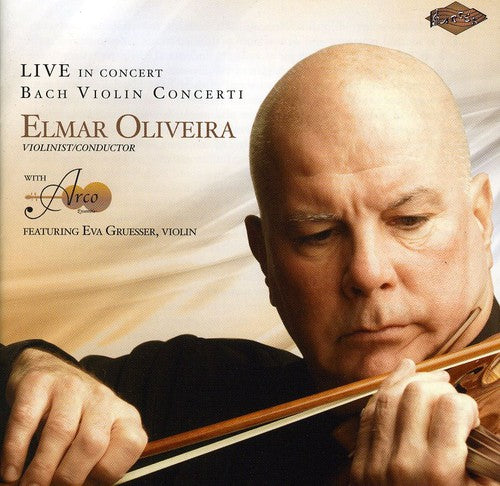
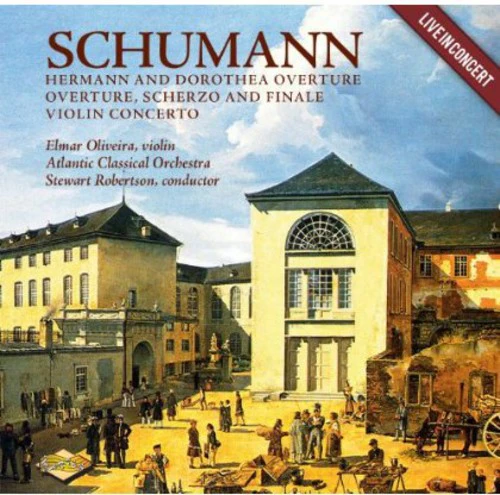
SCHUMANN Hermann and Dorothea Overture, Op. 136. Overture, Scherzo, and Finale, Op. 52. Violin Concerto in d, WoO 1 1 & • Stewart Robertson, cond; Elmar Oliveira (vn); Atlantic Classical O • ARTEK 0059 (79:08) Live: Boca Raton, FL 3/5/2012
& A conversation on the Schumann Violin Concerto with Elmar Oliveira and Stewart Robertson
In March of last year, a Boca Raton, Florida, audience was treated to this unusual all-Schumann program—unusual in that the works performed are not that often heard on record let alone live in concert. The highlight was Schumann’s ill-fated Violin Concerto, about which I’ve already had my say in the above interview. I first came to know the piece from Henryk Szeryng’s Mercury recording with Antal Doráti conducting the London Symphony Orchestra. That recording, coupled with Szeryng’s Mendelssohn Concerto was made in 1964, and I acquired it as an LP. I didn’t think much of the Schumann concerto then, and after a parade of others that followed—including Thomas Zehetmair, Joshua Bell, and Christian Tetzlaff—I still don’t think much of the piece now. Or, I didn’t, until I heard Elmar Oliveira play it on this CD. I wasn’t just trying to flatter him in our interview when I said I found his performance of the work the most persuasive I’ve heard.
I think there are some artists who play a piece for the same reason that some mountaineers climb a particular mountain—because it’s there. Then there are those artists who really believe in a piece and commit themselves to it body, mind, and soul in an effort to bring it to life in a way that no one else has before. I can’t, and won’t, say that I’m ready to accord Schumann’s violin concerto a place on high among the Beethoven, Mendelssohn, Brahms, Tchaikovsky, and Sibelius concertos, but I can, and will, say that Oliveira, Robertson, and the ACO’s performance of the score made more sense to me than it ever has, and has convinced me that the work deserves at least second-tier status among the likes of the Dvo?ák, Glazunov, Goldmark, and Bruch concertos—and that’s not bad company to be in. It’s certainly several steps above where Schumann’s concerto has long languished, and Oliveira and Robertson can take credit for its rehabilitation.
Schumann composed a trivet of concert overtures based on literary works. I use the word “trivet” rather than trilogy, because though the three scores were composed in the same year, 1851, they are not related, and they were assigned non-contiguous opus numbers. The first of them, Braut von Messina , op. 100, is based on Schiller’s tragic play of the same name. The second overture, Julius Caesar , op. 128, was inspired by Shakespeare’s tragedy. And last, the overture performed here, Hermann and Dorothea , op. 136, was inspired by Goethe’s epic poem telling of the tragic fate of two lovers during the French Revolution. Tchaikovsky, it seems, was not the first composer to use the Marseillaise when he incorporated it into his 1812 Overture ; Schumann uses it here to set the time and place for his score. In works such as these, the lines between concert overture and tone poem are blurred. The question is not merely academic: If an orchestral piece of music takes its inspiration from a literary work, and it purports to depict the work’s characters and/or to outline its story, how does that differ from a tone poem?
It’s a question that spills over into the other orchestral work on this program, the Overture, Scherzo, and Finale, op. 52. What is its musical taxonomy? Even Schumann didn’t seem to know, at one time referring to it as his “Symphony No. 2,” at another time as a “suite,” and at still another time as a “sinfonietta.” Reducing it to its component parts, one could say it’s a symphony without a slow movement. Perhaps because of confusion over its classification, the work was long neglected for most of the 19th century, but it has been dusted off in the 20th and taken up by a number of famous conductors in the modern recording era, from Kletzki, Schuricht, and Konwitschny, to Karajan, Solti, Sawallisch, Marriner, Gardiner, and Thielemann.
The two orchestral works are presented in highly polished performances by conductor Robertson and the Atlantic Classical Orchestra, but of course, it’s Schumann’s violin concerto with soloist Oliveira that is the main fare on the menu and the reason for you to purchase this disc. As mentioned earlier, a 20-minute bonus track at the end includes a fascinating conversation on the concerto between Oliveira and Robertson.
FANFARE: Jerry Dubins
& A conversation on the Schumann Violin Concerto with Elmar Oliveira and Stewart Robertson
In March of last year, a Boca Raton, Florida, audience was treated to this unusual all-Schumann program—unusual in that the works performed are not that often heard on record let alone live in concert. The highlight was Schumann’s ill-fated Violin Concerto, about which I’ve already had my say in the above interview. I first came to know the piece from Henryk Szeryng’s Mercury recording with Antal Doráti conducting the London Symphony Orchestra. That recording, coupled with Szeryng’s Mendelssohn Concerto was made in 1964, and I acquired it as an LP. I didn’t think much of the Schumann concerto then, and after a parade of others that followed—including Thomas Zehetmair, Joshua Bell, and Christian Tetzlaff—I still don’t think much of the piece now. Or, I didn’t, until I heard Elmar Oliveira play it on this CD. I wasn’t just trying to flatter him in our interview when I said I found his performance of the work the most persuasive I’ve heard.
I think there are some artists who play a piece for the same reason that some mountaineers climb a particular mountain—because it’s there. Then there are those artists who really believe in a piece and commit themselves to it body, mind, and soul in an effort to bring it to life in a way that no one else has before. I can’t, and won’t, say that I’m ready to accord Schumann’s violin concerto a place on high among the Beethoven, Mendelssohn, Brahms, Tchaikovsky, and Sibelius concertos, but I can, and will, say that Oliveira, Robertson, and the ACO’s performance of the score made more sense to me than it ever has, and has convinced me that the work deserves at least second-tier status among the likes of the Dvo?ák, Glazunov, Goldmark, and Bruch concertos—and that’s not bad company to be in. It’s certainly several steps above where Schumann’s concerto has long languished, and Oliveira and Robertson can take credit for its rehabilitation.
Schumann composed a trivet of concert overtures based on literary works. I use the word “trivet” rather than trilogy, because though the three scores were composed in the same year, 1851, they are not related, and they were assigned non-contiguous opus numbers. The first of them, Braut von Messina , op. 100, is based on Schiller’s tragic play of the same name. The second overture, Julius Caesar , op. 128, was inspired by Shakespeare’s tragedy. And last, the overture performed here, Hermann and Dorothea , op. 136, was inspired by Goethe’s epic poem telling of the tragic fate of two lovers during the French Revolution. Tchaikovsky, it seems, was not the first composer to use the Marseillaise when he incorporated it into his 1812 Overture ; Schumann uses it here to set the time and place for his score. In works such as these, the lines between concert overture and tone poem are blurred. The question is not merely academic: If an orchestral piece of music takes its inspiration from a literary work, and it purports to depict the work’s characters and/or to outline its story, how does that differ from a tone poem?
It’s a question that spills over into the other orchestral work on this program, the Overture, Scherzo, and Finale, op. 52. What is its musical taxonomy? Even Schumann didn’t seem to know, at one time referring to it as his “Symphony No. 2,” at another time as a “suite,” and at still another time as a “sinfonietta.” Reducing it to its component parts, one could say it’s a symphony without a slow movement. Perhaps because of confusion over its classification, the work was long neglected for most of the 19th century, but it has been dusted off in the 20th and taken up by a number of famous conductors in the modern recording era, from Kletzki, Schuricht, and Konwitschny, to Karajan, Solti, Sawallisch, Marriner, Gardiner, and Thielemann.
The two orchestral works are presented in highly polished performances by conductor Robertson and the Atlantic Classical Orchestra, but of course, it’s Schumann’s violin concerto with soloist Oliveira that is the main fare on the menu and the reason for you to purchase this disc. As mentioned earlier, a 20-minute bonus track at the end includes a fascinating conversation on the concerto between Oliveira and Robertson.
FANFARE: Jerry Dubins
SCHUMANN Hermann and Dorothea Overture, Op. 136. Overture, Scherzo, and Finale, Op. 52. Violin Concerto in d, WoO 1 1 & • Stewart Robertson, cond; Elmar Oliveira (vn); Atlantic Classical O • ARTEK 0059 (79:08) Live: Boca Raton, FL 3/5/2012
& A conversation on the Schumann Violin Concerto with Elmar Oliveira and Stewart Robertson
In March of last year, a Boca Raton, Florida, audience was treated to this unusual all-Schumann program—unusual in that the works performed are not that often heard on record let alone live in concert. The highlight was Schumann’s ill-fated Violin Concerto, about which I’ve already had my say in the above interview. I first came to know the piece from Henryk Szeryng’s Mercury recording with Antal Doráti conducting the London Symphony Orchestra. That recording, coupled with Szeryng’s Mendelssohn Concerto was made in 1964, and I acquired it as an LP. I didn’t think much of the Schumann concerto then, and after a parade of others that followed—including Thomas Zehetmair, Joshua Bell, and Christian Tetzlaff—I still don’t think much of the piece now. Or, I didn’t, until I heard Elmar Oliveira play it on this CD. I wasn’t just trying to flatter him in our interview when I said I found his performance of the work the most persuasive I’ve heard.
I think there are some artists who play a piece for the same reason that some mountaineers climb a particular mountain—because it’s there. Then there are those artists who really believe in a piece and commit themselves to it body, mind, and soul in an effort to bring it to life in a way that no one else has before. I can’t, and won’t, say that I’m ready to accord Schumann’s violin concerto a place on high among the Beethoven, Mendelssohn, Brahms, Tchaikovsky, and Sibelius concertos, but I can, and will, say that Oliveira, Robertson, and the ACO’s performance of the score made more sense to me than it ever has, and has convinced me that the work deserves at least second-tier status among the likes of the Dvo?ák, Glazunov, Goldmark, and Bruch concertos—and that’s not bad company to be in. It’s certainly several steps above where Schumann’s concerto has long languished, and Oliveira and Robertson can take credit for its rehabilitation.
Schumann composed a trivet of concert overtures based on literary works. I use the word “trivet” rather than trilogy, because though the three scores were composed in the same year, 1851, they are not related, and they were assigned non-contiguous opus numbers. The first of them, Braut von Messina , op. 100, is based on Schiller’s tragic play of the same name. The second overture, Julius Caesar , op. 128, was inspired by Shakespeare’s tragedy. And last, the overture performed here, Hermann and Dorothea , op. 136, was inspired by Goethe’s epic poem telling of the tragic fate of two lovers during the French Revolution. Tchaikovsky, it seems, was not the first composer to use the Marseillaise when he incorporated it into his 1812 Overture ; Schumann uses it here to set the time and place for his score. In works such as these, the lines between concert overture and tone poem are blurred. The question is not merely academic: If an orchestral piece of music takes its inspiration from a literary work, and it purports to depict the work’s characters and/or to outline its story, how does that differ from a tone poem?
It’s a question that spills over into the other orchestral work on this program, the Overture, Scherzo, and Finale, op. 52. What is its musical taxonomy? Even Schumann didn’t seem to know, at one time referring to it as his “Symphony No. 2,” at another time as a “suite,” and at still another time as a “sinfonietta.” Reducing it to its component parts, one could say it’s a symphony without a slow movement. Perhaps because of confusion over its classification, the work was long neglected for most of the 19th century, but it has been dusted off in the 20th and taken up by a number of famous conductors in the modern recording era, from Kletzki, Schuricht, and Konwitschny, to Karajan, Solti, Sawallisch, Marriner, Gardiner, and Thielemann.
The two orchestral works are presented in highly polished performances by conductor Robertson and the Atlantic Classical Orchestra, but of course, it’s Schumann’s violin concerto with soloist Oliveira that is the main fare on the menu and the reason for you to purchase this disc. As mentioned earlier, a 20-minute bonus track at the end includes a fascinating conversation on the concerto between Oliveira and Robertson.
FANFARE: Jerry Dubins
& A conversation on the Schumann Violin Concerto with Elmar Oliveira and Stewart Robertson
In March of last year, a Boca Raton, Florida, audience was treated to this unusual all-Schumann program—unusual in that the works performed are not that often heard on record let alone live in concert. The highlight was Schumann’s ill-fated Violin Concerto, about which I’ve already had my say in the above interview. I first came to know the piece from Henryk Szeryng’s Mercury recording with Antal Doráti conducting the London Symphony Orchestra. That recording, coupled with Szeryng’s Mendelssohn Concerto was made in 1964, and I acquired it as an LP. I didn’t think much of the Schumann concerto then, and after a parade of others that followed—including Thomas Zehetmair, Joshua Bell, and Christian Tetzlaff—I still don’t think much of the piece now. Or, I didn’t, until I heard Elmar Oliveira play it on this CD. I wasn’t just trying to flatter him in our interview when I said I found his performance of the work the most persuasive I’ve heard.
I think there are some artists who play a piece for the same reason that some mountaineers climb a particular mountain—because it’s there. Then there are those artists who really believe in a piece and commit themselves to it body, mind, and soul in an effort to bring it to life in a way that no one else has before. I can’t, and won’t, say that I’m ready to accord Schumann’s violin concerto a place on high among the Beethoven, Mendelssohn, Brahms, Tchaikovsky, and Sibelius concertos, but I can, and will, say that Oliveira, Robertson, and the ACO’s performance of the score made more sense to me than it ever has, and has convinced me that the work deserves at least second-tier status among the likes of the Dvo?ák, Glazunov, Goldmark, and Bruch concertos—and that’s not bad company to be in. It’s certainly several steps above where Schumann’s concerto has long languished, and Oliveira and Robertson can take credit for its rehabilitation.
Schumann composed a trivet of concert overtures based on literary works. I use the word “trivet” rather than trilogy, because though the three scores were composed in the same year, 1851, they are not related, and they were assigned non-contiguous opus numbers. The first of them, Braut von Messina , op. 100, is based on Schiller’s tragic play of the same name. The second overture, Julius Caesar , op. 128, was inspired by Shakespeare’s tragedy. And last, the overture performed here, Hermann and Dorothea , op. 136, was inspired by Goethe’s epic poem telling of the tragic fate of two lovers during the French Revolution. Tchaikovsky, it seems, was not the first composer to use the Marseillaise when he incorporated it into his 1812 Overture ; Schumann uses it here to set the time and place for his score. In works such as these, the lines between concert overture and tone poem are blurred. The question is not merely academic: If an orchestral piece of music takes its inspiration from a literary work, and it purports to depict the work’s characters and/or to outline its story, how does that differ from a tone poem?
It’s a question that spills over into the other orchestral work on this program, the Overture, Scherzo, and Finale, op. 52. What is its musical taxonomy? Even Schumann didn’t seem to know, at one time referring to it as his “Symphony No. 2,” at another time as a “suite,” and at still another time as a “sinfonietta.” Reducing it to its component parts, one could say it’s a symphony without a slow movement. Perhaps because of confusion over its classification, the work was long neglected for most of the 19th century, but it has been dusted off in the 20th and taken up by a number of famous conductors in the modern recording era, from Kletzki, Schuricht, and Konwitschny, to Karajan, Solti, Sawallisch, Marriner, Gardiner, and Thielemann.
The two orchestral works are presented in highly polished performances by conductor Robertson and the Atlantic Classical Orchestra, but of course, it’s Schumann’s violin concerto with soloist Oliveira that is the main fare on the menu and the reason for you to purchase this disc. As mentioned earlier, a 20-minute bonus track at the end includes a fascinating conversation on the concerto between Oliveira and Robertson.
FANFARE: Jerry Dubins
$14.99
Schumann: Hermann & Dorothea Overture; Overture, Scherzo & Finale; Violin Concerto—
$14.99
Description
SCHUMANN Hermann and Dorothea Overture, Op. 136. Overture, Scherzo, and Finale, Op. 52. Violin Concerto in d, WoO 1 1 & • Stewart Robertson, cond; Elmar Oliveira (vn); Atlantic Classical O • ARTEK 0059 (79:08) Live: Boca Raton, FL 3/5/2012
& A conversation on the Schumann Violin Concerto with Elmar Oliveira and Stewart Robertson
In March of last year, a Boca Raton, Florida, audience was treated to this unusual all-Schumann program—unusual in that the works performed are not that often heard on record let alone live in concert. The highlight was Schumann’s ill-fated Violin Concerto, about which I’ve already had my say in the above interview. I first came to know the piece from Henryk Szeryng’s Mercury recording with Antal Doráti conducting the London Symphony Orchestra. That recording, coupled with Szeryng’s Mendelssohn Concerto was made in 1964, and I acquired it as an LP. I didn’t think much of the Schumann concerto then, and after a parade of others that followed—including Thomas Zehetmair, Joshua Bell, and Christian Tetzlaff—I still don’t think much of the piece now. Or, I didn’t, until I heard Elmar Oliveira play it on this CD. I wasn’t just trying to flatter him in our interview when I said I found his performance of the work the most persuasive I’ve heard.
I think there are some artists who play a piece for the same reason that some mountaineers climb a particular mountain—because it’s there. Then there are those artists who really believe in a piece and commit themselves to it body, mind, and soul in an effort to bring it to life in a way that no one else has before. I can’t, and won’t, say that I’m ready to accord Schumann’s violin concerto a place on high among the Beethoven, Mendelssohn, Brahms, Tchaikovsky, and Sibelius concertos, but I can, and will, say that Oliveira, Robertson, and the ACO’s performance of the score made more sense to me than it ever has, and has convinced me that the work deserves at least second-tier status among the likes of the Dvo?ák, Glazunov, Goldmark, and Bruch concertos—and that’s not bad company to be in. It’s certainly several steps above where Schumann’s concerto has long languished, and Oliveira and Robertson can take credit for its rehabilitation.
Schumann composed a trivet of concert overtures based on literary works. I use the word “trivet” rather than trilogy, because though the three scores were composed in the same year, 1851, they are not related, and they were assigned non-contiguous opus numbers. The first of them, Braut von Messina , op. 100, is based on Schiller’s tragic play of the same name. The second overture, Julius Caesar , op. 128, was inspired by Shakespeare’s tragedy. And last, the overture performed here, Hermann and Dorothea , op. 136, was inspired by Goethe’s epic poem telling of the tragic fate of two lovers during the French Revolution. Tchaikovsky, it seems, was not the first composer to use the Marseillaise when he incorporated it into his 1812 Overture ; Schumann uses it here to set the time and place for his score. In works such as these, the lines between concert overture and tone poem are blurred. The question is not merely academic: If an orchestral piece of music takes its inspiration from a literary work, and it purports to depict the work’s characters and/or to outline its story, how does that differ from a tone poem?
It’s a question that spills over into the other orchestral work on this program, the Overture, Scherzo, and Finale, op. 52. What is its musical taxonomy? Even Schumann didn’t seem to know, at one time referring to it as his “Symphony No. 2,” at another time as a “suite,” and at still another time as a “sinfonietta.” Reducing it to its component parts, one could say it’s a symphony without a slow movement. Perhaps because of confusion over its classification, the work was long neglected for most of the 19th century, but it has been dusted off in the 20th and taken up by a number of famous conductors in the modern recording era, from Kletzki, Schuricht, and Konwitschny, to Karajan, Solti, Sawallisch, Marriner, Gardiner, and Thielemann.
The two orchestral works are presented in highly polished performances by conductor Robertson and the Atlantic Classical Orchestra, but of course, it’s Schumann’s violin concerto with soloist Oliveira that is the main fare on the menu and the reason for you to purchase this disc. As mentioned earlier, a 20-minute bonus track at the end includes a fascinating conversation on the concerto between Oliveira and Robertson.
FANFARE: Jerry Dubins
& A conversation on the Schumann Violin Concerto with Elmar Oliveira and Stewart Robertson
In March of last year, a Boca Raton, Florida, audience was treated to this unusual all-Schumann program—unusual in that the works performed are not that often heard on record let alone live in concert. The highlight was Schumann’s ill-fated Violin Concerto, about which I’ve already had my say in the above interview. I first came to know the piece from Henryk Szeryng’s Mercury recording with Antal Doráti conducting the London Symphony Orchestra. That recording, coupled with Szeryng’s Mendelssohn Concerto was made in 1964, and I acquired it as an LP. I didn’t think much of the Schumann concerto then, and after a parade of others that followed—including Thomas Zehetmair, Joshua Bell, and Christian Tetzlaff—I still don’t think much of the piece now. Or, I didn’t, until I heard Elmar Oliveira play it on this CD. I wasn’t just trying to flatter him in our interview when I said I found his performance of the work the most persuasive I’ve heard.
I think there are some artists who play a piece for the same reason that some mountaineers climb a particular mountain—because it’s there. Then there are those artists who really believe in a piece and commit themselves to it body, mind, and soul in an effort to bring it to life in a way that no one else has before. I can’t, and won’t, say that I’m ready to accord Schumann’s violin concerto a place on high among the Beethoven, Mendelssohn, Brahms, Tchaikovsky, and Sibelius concertos, but I can, and will, say that Oliveira, Robertson, and the ACO’s performance of the score made more sense to me than it ever has, and has convinced me that the work deserves at least second-tier status among the likes of the Dvo?ák, Glazunov, Goldmark, and Bruch concertos—and that’s not bad company to be in. It’s certainly several steps above where Schumann’s concerto has long languished, and Oliveira and Robertson can take credit for its rehabilitation.
Schumann composed a trivet of concert overtures based on literary works. I use the word “trivet” rather than trilogy, because though the three scores were composed in the same year, 1851, they are not related, and they were assigned non-contiguous opus numbers. The first of them, Braut von Messina , op. 100, is based on Schiller’s tragic play of the same name. The second overture, Julius Caesar , op. 128, was inspired by Shakespeare’s tragedy. And last, the overture performed here, Hermann and Dorothea , op. 136, was inspired by Goethe’s epic poem telling of the tragic fate of two lovers during the French Revolution. Tchaikovsky, it seems, was not the first composer to use the Marseillaise when he incorporated it into his 1812 Overture ; Schumann uses it here to set the time and place for his score. In works such as these, the lines between concert overture and tone poem are blurred. The question is not merely academic: If an orchestral piece of music takes its inspiration from a literary work, and it purports to depict the work’s characters and/or to outline its story, how does that differ from a tone poem?
It’s a question that spills over into the other orchestral work on this program, the Overture, Scherzo, and Finale, op. 52. What is its musical taxonomy? Even Schumann didn’t seem to know, at one time referring to it as his “Symphony No. 2,” at another time as a “suite,” and at still another time as a “sinfonietta.” Reducing it to its component parts, one could say it’s a symphony without a slow movement. Perhaps because of confusion over its classification, the work was long neglected for most of the 19th century, but it has been dusted off in the 20th and taken up by a number of famous conductors in the modern recording era, from Kletzki, Schuricht, and Konwitschny, to Karajan, Solti, Sawallisch, Marriner, Gardiner, and Thielemann.
The two orchestral works are presented in highly polished performances by conductor Robertson and the Atlantic Classical Orchestra, but of course, it’s Schumann’s violin concerto with soloist Oliveira that is the main fare on the menu and the reason for you to purchase this disc. As mentioned earlier, a 20-minute bonus track at the end includes a fascinating conversation on the concerto between Oliveira and Robertson.
FANFARE: Jerry Dubins