🎉 Up to 70% Off Selected ItemsShop Sale

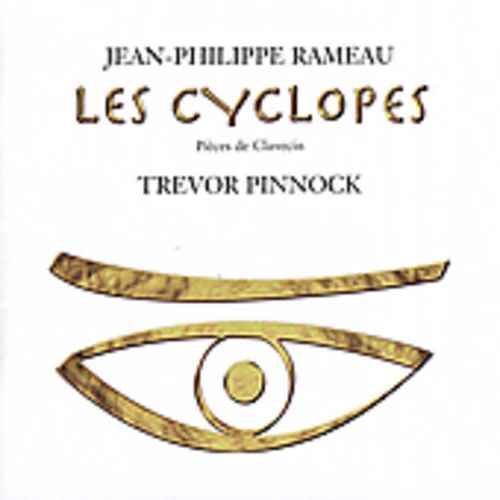
Rameau: Les Cyclopes / Trevor Pinnock
R E V I E W S:
"A highly visible figure as leader of the renowned English Consort for the past three decades and, in Canada, as the former music director of the National Arts Centre Orchestra, Trevor Pinnock has recently defected from the podium to resume his career as a keyboard virtuoso with these brilliant performances on the 18th-century Goermans-Taskin French harpsichord from the collection of the University of Edinburgh. The generous selection of 80 minutes includes two 1728 Suites in A minor and E minor flanked by six selections (L’Entretien des Muses, Les Tourbillons, Les Cyclopes, L’Enharmonique, L’Egyptienne and La Poule) from Rameau’s most beguiling character pieces. Avie’s recording of this remarkably well-voiced instrument is exemplary. Special recognition is due to the exquisite tuning of the instrument in French unequal temperament by John Raymond, which allows us to truly appreciate the boldness of Rameau’s tonal excursions."
- Daniel Foley, TheWholeNote.com
You’ve doubtless been wondering about it for some time. Now that the English Consort has folded, what will Trevor Pinnock do? Well, worry no longer. This album provides the answer, at least in part: he’ll record. In a real way, this Rameau is a return to Pinnock’s roots, as he’d performed the Pièces de Clavecin en Concerts with the Gailliard Harpsichord Trio while in his teens, and recorded Rameau’s harpsichord works in the 1970s.
This latest release shows him in excellent form. “La poule” is attentive to rhythmic values, without pushing the poor fowl’s tempo immoderately. The subtle hesitancy at the beginning of each clucking phrase works well, in a piece that is more difficult to play correctly than it seems at first glance. Both the “Musette en Rondeau” and the famed “Tambourin” from the same suite have a folklike insistence on their respective drones that never gets in the way of the relentless but judicious momentum.
While the “Fanfarinette” is faster than that recorded so well by Sophie Yates (Chandos CHAN 0708) and less inclined to maintain the piece’s skipping rhythm, Pinnock still applies notes inégales extensively and to great effect at phrase starts and conclusions. “La triomphante” is moderate and brash, with the strumming effect subtly emphasized: occasionally in the bass chords, or in the figuration, or in the rhythm accorded the right-hand melody. Ornamentation is always sensibly selected.
Pinnock isn’t afraid to bring his own interpretations to the mix on occasion, which is a nice way of saying that at times he moves into areas that turn their back on tradition as it’s currently understood. Is this necessarily wrong? I think you risk the hazard of the die when you enter the game, but Pinnock’s perceptions are interesting, usually convincing, and never made me think for once that I had a party recording on my hands. The A-Minor Sarabande is one good example in the “interesting” camp. Taken at a relatively slow, steady tempo, the ornamentation is paced for a much faster piece. This focuses attention on the stately, gliding theme, though in some instances only the final note of the ornament registers. I don’t consider the results successful, but I can understand the reasoning behind the approach. More persuasive is Pinnock’s unusual handling of “La rappel des oiseaux.” The opening section and close are handled much quicker than usual, emphasizing the repetitive nature of the bird calls, while the middle section is taken slowly and freely, the better to emphasize the shifts in harmony. The harpsichordist makes use as well of his instrument’s 4? set of strings at the start to bring the music up an octave, then switches down to the 8? set for the central section, but only moves up an octave once more midway through the final section. It’s an imaginative effect, and one that again chips away at the prevailing myths that all harpsichords sound alike, and possess no variety of touch...
Pinnock’s harpsichord is a double-manual instrument by Goermans from 1764, significantly modified 20 years later by Taskin. It is a richly beautiful instrument, robust yet capable of delicacy, and caught to perfection with little action noise and just enough resonance to capture the bloom... This is a fine album, and one well worth your purchase.
Barry Brenesal, FANFARE
"A highly visible figure as leader of the renowned English Consort for the past three decades and, in Canada, as the former music director of the National Arts Centre Orchestra, Trevor Pinnock has recently defected from the podium to resume his career as a keyboard virtuoso with these brilliant performances on the 18th-century Goermans-Taskin French harpsichord from the collection of the University of Edinburgh. The generous selection of 80 minutes includes two 1728 Suites in A minor and E minor flanked by six selections (L’Entretien des Muses, Les Tourbillons, Les Cyclopes, L’Enharmonique, L’Egyptienne and La Poule) from Rameau’s most beguiling character pieces. Avie’s recording of this remarkably well-voiced instrument is exemplary. Special recognition is due to the exquisite tuning of the instrument in French unequal temperament by John Raymond, which allows us to truly appreciate the boldness of Rameau’s tonal excursions."
- Daniel Foley, TheWholeNote.com
You’ve doubtless been wondering about it for some time. Now that the English Consort has folded, what will Trevor Pinnock do? Well, worry no longer. This album provides the answer, at least in part: he’ll record. In a real way, this Rameau is a return to Pinnock’s roots, as he’d performed the Pièces de Clavecin en Concerts with the Gailliard Harpsichord Trio while in his teens, and recorded Rameau’s harpsichord works in the 1970s.
This latest release shows him in excellent form. “La poule” is attentive to rhythmic values, without pushing the poor fowl’s tempo immoderately. The subtle hesitancy at the beginning of each clucking phrase works well, in a piece that is more difficult to play correctly than it seems at first glance. Both the “Musette en Rondeau” and the famed “Tambourin” from the same suite have a folklike insistence on their respective drones that never gets in the way of the relentless but judicious momentum.
While the “Fanfarinette” is faster than that recorded so well by Sophie Yates (Chandos CHAN 0708) and less inclined to maintain the piece’s skipping rhythm, Pinnock still applies notes inégales extensively and to great effect at phrase starts and conclusions. “La triomphante” is moderate and brash, with the strumming effect subtly emphasized: occasionally in the bass chords, or in the figuration, or in the rhythm accorded the right-hand melody. Ornamentation is always sensibly selected.
Pinnock isn’t afraid to bring his own interpretations to the mix on occasion, which is a nice way of saying that at times he moves into areas that turn their back on tradition as it’s currently understood. Is this necessarily wrong? I think you risk the hazard of the die when you enter the game, but Pinnock’s perceptions are interesting, usually convincing, and never made me think for once that I had a party recording on my hands. The A-Minor Sarabande is one good example in the “interesting” camp. Taken at a relatively slow, steady tempo, the ornamentation is paced for a much faster piece. This focuses attention on the stately, gliding theme, though in some instances only the final note of the ornament registers. I don’t consider the results successful, but I can understand the reasoning behind the approach. More persuasive is Pinnock’s unusual handling of “La rappel des oiseaux.” The opening section and close are handled much quicker than usual, emphasizing the repetitive nature of the bird calls, while the middle section is taken slowly and freely, the better to emphasize the shifts in harmony. The harpsichordist makes use as well of his instrument’s 4? set of strings at the start to bring the music up an octave, then switches down to the 8? set for the central section, but only moves up an octave once more midway through the final section. It’s an imaginative effect, and one that again chips away at the prevailing myths that all harpsichords sound alike, and possess no variety of touch...
Pinnock’s harpsichord is a double-manual instrument by Goermans from 1764, significantly modified 20 years later by Taskin. It is a richly beautiful instrument, robust yet capable of delicacy, and caught to perfection with little action noise and just enough resonance to capture the bloom... This is a fine album, and one well worth your purchase.
Barry Brenesal, FANFARE
R E V I E W S:
"A highly visible figure as leader of the renowned English Consort for the past three decades and, in Canada, as the former music director of the National Arts Centre Orchestra, Trevor Pinnock has recently defected from the podium to resume his career as a keyboard virtuoso with these brilliant performances on the 18th-century Goermans-Taskin French harpsichord from the collection of the University of Edinburgh. The generous selection of 80 minutes includes two 1728 Suites in A minor and E minor flanked by six selections (L’Entretien des Muses, Les Tourbillons, Les Cyclopes, L’Enharmonique, L’Egyptienne and La Poule) from Rameau’s most beguiling character pieces. Avie’s recording of this remarkably well-voiced instrument is exemplary. Special recognition is due to the exquisite tuning of the instrument in French unequal temperament by John Raymond, which allows us to truly appreciate the boldness of Rameau’s tonal excursions."
- Daniel Foley, TheWholeNote.com
You’ve doubtless been wondering about it for some time. Now that the English Consort has folded, what will Trevor Pinnock do? Well, worry no longer. This album provides the answer, at least in part: he’ll record. In a real way, this Rameau is a return to Pinnock’s roots, as he’d performed the Pièces de Clavecin en Concerts with the Gailliard Harpsichord Trio while in his teens, and recorded Rameau’s harpsichord works in the 1970s.
This latest release shows him in excellent form. “La poule” is attentive to rhythmic values, without pushing the poor fowl’s tempo immoderately. The subtle hesitancy at the beginning of each clucking phrase works well, in a piece that is more difficult to play correctly than it seems at first glance. Both the “Musette en Rondeau” and the famed “Tambourin” from the same suite have a folklike insistence on their respective drones that never gets in the way of the relentless but judicious momentum.
While the “Fanfarinette” is faster than that recorded so well by Sophie Yates (Chandos CHAN 0708) and less inclined to maintain the piece’s skipping rhythm, Pinnock still applies notes inégales extensively and to great effect at phrase starts and conclusions. “La triomphante” is moderate and brash, with the strumming effect subtly emphasized: occasionally in the bass chords, or in the figuration, or in the rhythm accorded the right-hand melody. Ornamentation is always sensibly selected.
Pinnock isn’t afraid to bring his own interpretations to the mix on occasion, which is a nice way of saying that at times he moves into areas that turn their back on tradition as it’s currently understood. Is this necessarily wrong? I think you risk the hazard of the die when you enter the game, but Pinnock’s perceptions are interesting, usually convincing, and never made me think for once that I had a party recording on my hands. The A-Minor Sarabande is one good example in the “interesting” camp. Taken at a relatively slow, steady tempo, the ornamentation is paced for a much faster piece. This focuses attention on the stately, gliding theme, though in some instances only the final note of the ornament registers. I don’t consider the results successful, but I can understand the reasoning behind the approach. More persuasive is Pinnock’s unusual handling of “La rappel des oiseaux.” The opening section and close are handled much quicker than usual, emphasizing the repetitive nature of the bird calls, while the middle section is taken slowly and freely, the better to emphasize the shifts in harmony. The harpsichordist makes use as well of his instrument’s 4? set of strings at the start to bring the music up an octave, then switches down to the 8? set for the central section, but only moves up an octave once more midway through the final section. It’s an imaginative effect, and one that again chips away at the prevailing myths that all harpsichords sound alike, and possess no variety of touch...
Pinnock’s harpsichord is a double-manual instrument by Goermans from 1764, significantly modified 20 years later by Taskin. It is a richly beautiful instrument, robust yet capable of delicacy, and caught to perfection with little action noise and just enough resonance to capture the bloom... This is a fine album, and one well worth your purchase.
Barry Brenesal, FANFARE
"A highly visible figure as leader of the renowned English Consort for the past three decades and, in Canada, as the former music director of the National Arts Centre Orchestra, Trevor Pinnock has recently defected from the podium to resume his career as a keyboard virtuoso with these brilliant performances on the 18th-century Goermans-Taskin French harpsichord from the collection of the University of Edinburgh. The generous selection of 80 minutes includes two 1728 Suites in A minor and E minor flanked by six selections (L’Entretien des Muses, Les Tourbillons, Les Cyclopes, L’Enharmonique, L’Egyptienne and La Poule) from Rameau’s most beguiling character pieces. Avie’s recording of this remarkably well-voiced instrument is exemplary. Special recognition is due to the exquisite tuning of the instrument in French unequal temperament by John Raymond, which allows us to truly appreciate the boldness of Rameau’s tonal excursions."
- Daniel Foley, TheWholeNote.com
You’ve doubtless been wondering about it for some time. Now that the English Consort has folded, what will Trevor Pinnock do? Well, worry no longer. This album provides the answer, at least in part: he’ll record. In a real way, this Rameau is a return to Pinnock’s roots, as he’d performed the Pièces de Clavecin en Concerts with the Gailliard Harpsichord Trio while in his teens, and recorded Rameau’s harpsichord works in the 1970s.
This latest release shows him in excellent form. “La poule” is attentive to rhythmic values, without pushing the poor fowl’s tempo immoderately. The subtle hesitancy at the beginning of each clucking phrase works well, in a piece that is more difficult to play correctly than it seems at first glance. Both the “Musette en Rondeau” and the famed “Tambourin” from the same suite have a folklike insistence on their respective drones that never gets in the way of the relentless but judicious momentum.
While the “Fanfarinette” is faster than that recorded so well by Sophie Yates (Chandos CHAN 0708) and less inclined to maintain the piece’s skipping rhythm, Pinnock still applies notes inégales extensively and to great effect at phrase starts and conclusions. “La triomphante” is moderate and brash, with the strumming effect subtly emphasized: occasionally in the bass chords, or in the figuration, or in the rhythm accorded the right-hand melody. Ornamentation is always sensibly selected.
Pinnock isn’t afraid to bring his own interpretations to the mix on occasion, which is a nice way of saying that at times he moves into areas that turn their back on tradition as it’s currently understood. Is this necessarily wrong? I think you risk the hazard of the die when you enter the game, but Pinnock’s perceptions are interesting, usually convincing, and never made me think for once that I had a party recording on my hands. The A-Minor Sarabande is one good example in the “interesting” camp. Taken at a relatively slow, steady tempo, the ornamentation is paced for a much faster piece. This focuses attention on the stately, gliding theme, though in some instances only the final note of the ornament registers. I don’t consider the results successful, but I can understand the reasoning behind the approach. More persuasive is Pinnock’s unusual handling of “La rappel des oiseaux.” The opening section and close are handled much quicker than usual, emphasizing the repetitive nature of the bird calls, while the middle section is taken slowly and freely, the better to emphasize the shifts in harmony. The harpsichordist makes use as well of his instrument’s 4? set of strings at the start to bring the music up an octave, then switches down to the 8? set for the central section, but only moves up an octave once more midway through the final section. It’s an imaginative effect, and one that again chips away at the prevailing myths that all harpsichords sound alike, and possess no variety of touch...
Pinnock’s harpsichord is a double-manual instrument by Goermans from 1764, significantly modified 20 years later by Taskin. It is a richly beautiful instrument, robust yet capable of delicacy, and caught to perfection with little action noise and just enough resonance to capture the bloom... This is a fine album, and one well worth your purchase.
Barry Brenesal, FANFARE
$14.99
Rameau: Les Cyclopes / Trevor Pinnock—
$14.99
Description
R E V I E W S:
"A highly visible figure as leader of the renowned English Consort for the past three decades and, in Canada, as the former music director of the National Arts Centre Orchestra, Trevor Pinnock has recently defected from the podium to resume his career as a keyboard virtuoso with these brilliant performances on the 18th-century Goermans-Taskin French harpsichord from the collection of the University of Edinburgh. The generous selection of 80 minutes includes two 1728 Suites in A minor and E minor flanked by six selections (L’Entretien des Muses, Les Tourbillons, Les Cyclopes, L’Enharmonique, L’Egyptienne and La Poule) from Rameau’s most beguiling character pieces. Avie’s recording of this remarkably well-voiced instrument is exemplary. Special recognition is due to the exquisite tuning of the instrument in French unequal temperament by John Raymond, which allows us to truly appreciate the boldness of Rameau’s tonal excursions."
- Daniel Foley, TheWholeNote.com
You’ve doubtless been wondering about it for some time. Now that the English Consort has folded, what will Trevor Pinnock do? Well, worry no longer. This album provides the answer, at least in part: he’ll record. In a real way, this Rameau is a return to Pinnock’s roots, as he’d performed the Pièces de Clavecin en Concerts with the Gailliard Harpsichord Trio while in his teens, and recorded Rameau’s harpsichord works in the 1970s.
This latest release shows him in excellent form. “La poule” is attentive to rhythmic values, without pushing the poor fowl’s tempo immoderately. The subtle hesitancy at the beginning of each clucking phrase works well, in a piece that is more difficult to play correctly than it seems at first glance. Both the “Musette en Rondeau” and the famed “Tambourin” from the same suite have a folklike insistence on their respective drones that never gets in the way of the relentless but judicious momentum.
While the “Fanfarinette” is faster than that recorded so well by Sophie Yates (Chandos CHAN 0708) and less inclined to maintain the piece’s skipping rhythm, Pinnock still applies notes inégales extensively and to great effect at phrase starts and conclusions. “La triomphante” is moderate and brash, with the strumming effect subtly emphasized: occasionally in the bass chords, or in the figuration, or in the rhythm accorded the right-hand melody. Ornamentation is always sensibly selected.
Pinnock isn’t afraid to bring his own interpretations to the mix on occasion, which is a nice way of saying that at times he moves into areas that turn their back on tradition as it’s currently understood. Is this necessarily wrong? I think you risk the hazard of the die when you enter the game, but Pinnock’s perceptions are interesting, usually convincing, and never made me think for once that I had a party recording on my hands. The A-Minor Sarabande is one good example in the “interesting” camp. Taken at a relatively slow, steady tempo, the ornamentation is paced for a much faster piece. This focuses attention on the stately, gliding theme, though in some instances only the final note of the ornament registers. I don’t consider the results successful, but I can understand the reasoning behind the approach. More persuasive is Pinnock’s unusual handling of “La rappel des oiseaux.” The opening section and close are handled much quicker than usual, emphasizing the repetitive nature of the bird calls, while the middle section is taken slowly and freely, the better to emphasize the shifts in harmony. The harpsichordist makes use as well of his instrument’s 4? set of strings at the start to bring the music up an octave, then switches down to the 8? set for the central section, but only moves up an octave once more midway through the final section. It’s an imaginative effect, and one that again chips away at the prevailing myths that all harpsichords sound alike, and possess no variety of touch...
Pinnock’s harpsichord is a double-manual instrument by Goermans from 1764, significantly modified 20 years later by Taskin. It is a richly beautiful instrument, robust yet capable of delicacy, and caught to perfection with little action noise and just enough resonance to capture the bloom... This is a fine album, and one well worth your purchase.
Barry Brenesal, FANFARE
"A highly visible figure as leader of the renowned English Consort for the past three decades and, in Canada, as the former music director of the National Arts Centre Orchestra, Trevor Pinnock has recently defected from the podium to resume his career as a keyboard virtuoso with these brilliant performances on the 18th-century Goermans-Taskin French harpsichord from the collection of the University of Edinburgh. The generous selection of 80 minutes includes two 1728 Suites in A minor and E minor flanked by six selections (L’Entretien des Muses, Les Tourbillons, Les Cyclopes, L’Enharmonique, L’Egyptienne and La Poule) from Rameau’s most beguiling character pieces. Avie’s recording of this remarkably well-voiced instrument is exemplary. Special recognition is due to the exquisite tuning of the instrument in French unequal temperament by John Raymond, which allows us to truly appreciate the boldness of Rameau’s tonal excursions."
- Daniel Foley, TheWholeNote.com
You’ve doubtless been wondering about it for some time. Now that the English Consort has folded, what will Trevor Pinnock do? Well, worry no longer. This album provides the answer, at least in part: he’ll record. In a real way, this Rameau is a return to Pinnock’s roots, as he’d performed the Pièces de Clavecin en Concerts with the Gailliard Harpsichord Trio while in his teens, and recorded Rameau’s harpsichord works in the 1970s.
This latest release shows him in excellent form. “La poule” is attentive to rhythmic values, without pushing the poor fowl’s tempo immoderately. The subtle hesitancy at the beginning of each clucking phrase works well, in a piece that is more difficult to play correctly than it seems at first glance. Both the “Musette en Rondeau” and the famed “Tambourin” from the same suite have a folklike insistence on their respective drones that never gets in the way of the relentless but judicious momentum.
While the “Fanfarinette” is faster than that recorded so well by Sophie Yates (Chandos CHAN 0708) and less inclined to maintain the piece’s skipping rhythm, Pinnock still applies notes inégales extensively and to great effect at phrase starts and conclusions. “La triomphante” is moderate and brash, with the strumming effect subtly emphasized: occasionally in the bass chords, or in the figuration, or in the rhythm accorded the right-hand melody. Ornamentation is always sensibly selected.
Pinnock isn’t afraid to bring his own interpretations to the mix on occasion, which is a nice way of saying that at times he moves into areas that turn their back on tradition as it’s currently understood. Is this necessarily wrong? I think you risk the hazard of the die when you enter the game, but Pinnock’s perceptions are interesting, usually convincing, and never made me think for once that I had a party recording on my hands. The A-Minor Sarabande is one good example in the “interesting” camp. Taken at a relatively slow, steady tempo, the ornamentation is paced for a much faster piece. This focuses attention on the stately, gliding theme, though in some instances only the final note of the ornament registers. I don’t consider the results successful, but I can understand the reasoning behind the approach. More persuasive is Pinnock’s unusual handling of “La rappel des oiseaux.” The opening section and close are handled much quicker than usual, emphasizing the repetitive nature of the bird calls, while the middle section is taken slowly and freely, the better to emphasize the shifts in harmony. The harpsichordist makes use as well of his instrument’s 4? set of strings at the start to bring the music up an octave, then switches down to the 8? set for the central section, but only moves up an octave once more midway through the final section. It’s an imaginative effect, and one that again chips away at the prevailing myths that all harpsichords sound alike, and possess no variety of touch...
Pinnock’s harpsichord is a double-manual instrument by Goermans from 1764, significantly modified 20 years later by Taskin. It is a richly beautiful instrument, robust yet capable of delicacy, and caught to perfection with little action noise and just enough resonance to capture the bloom... This is a fine album, and one well worth your purchase.
Barry Brenesal, FANFARE